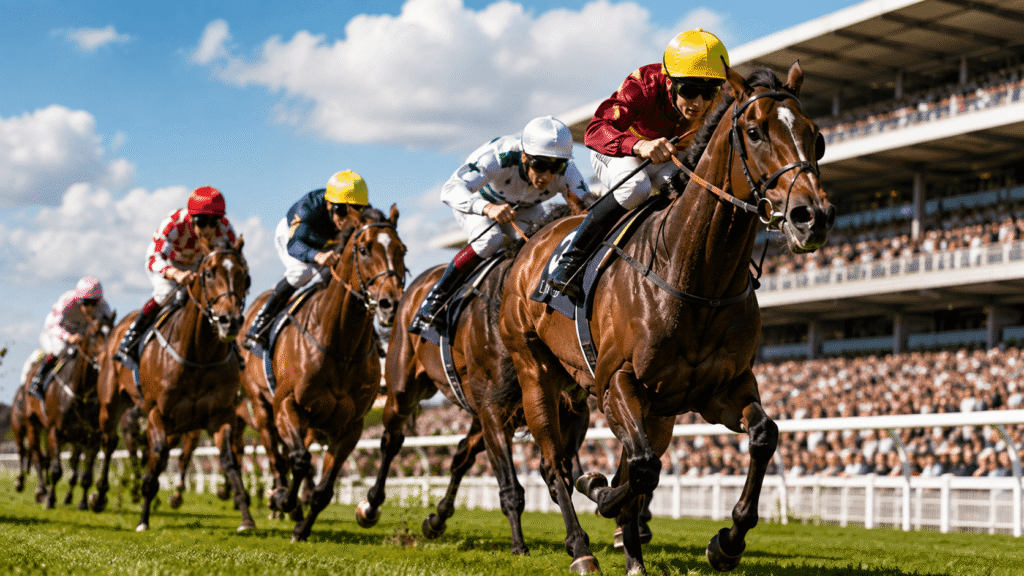
Horse racing combines the raw athleticism of the horse with the tactical judgement of jockeys and trainers, producing a sport that rewards careful observation as much as it does simple excitement over a fast finish. For newcomers, the array of terminology and race types can feel overwhelming, but understanding a few core concepts quickly opens up a much richer appreciation of what is actually happening as horses thunder toward the finish line.
Latest Sports News
The Main Types of Racing
Flat racing, run on level ground without obstacles, is the most widely recognised form of the sport, testing pure speed and stamina over distances that typically range from around five furlongs up to two miles or more. Jump racing, also known as National Hunt racing in some regions, adds fences or hurdles that horses must clear during the race, demanding additional athleticism and jumping technique alongside raw speed, and often producing more unpredictable results as a consequence.
Within flat racing, races are further divided by distance and by the type of competition, ranging from sprint races emphasising explosive early speed to longer staying races that test sustained stamina over an extended distance. Understanding which type of race you are watching helps set expectations for how the pace and tactics are likely to unfold.
Reading the Racecard
A racecard provides essential information about each runner, including the horse’s recent form, typically shown as a sequence of numbers representing finishing positions in recent races, along with the weight the horse is carrying, the jockey and trainer, and often the horse’s starting price in the betting market. Learning to interpret recent form is one of the most valuable skills for understanding a race’s likely competitiveness, since a string of strong recent finishes generally suggests a horse in good form, while a gap since a horse’s last run might indicate a break for injury recovery or simply careful placement by the trainer.
Weight carried also matters significantly in many races, since handicap races are specifically designed to assign different weights to horses based on their ability, theoretically levelling the field and making outcomes harder to predict purely from past performance alone.
The Role of the Jockey
While the horse provides the raw athletic ability, jockeys play a crucial tactical role in how a race unfolds. Positioning during the early and middle stages of a race, judging exactly when to ask a horse for its final effort, and reading how rivals are travelling all require split-second judgement built on years of experience. A well-timed run can carry a horse from off the pace into contention in the closing stages, while a jockey who commits too early risks their mount running out of stamina before the finish line.
Communication between jockey and trainer before a race also shapes tactics significantly, with trainers often providing specific instructions about pace and positioning based on their knowledge of the horse’s preferences and the likely dynamics of the particular field they are facing that day.
Breeding and Pedigree
Pedigree plays a significant role in horse racing, with breeding programmes carefully designed to combine successful bloodlines in the hope of producing future champions. Understanding a horse’s sire and dam, along with their racing and breeding records, can offer clues about a young horse’s likely aptitude for distance, going, or racing style, even before it has built up much of its own competitive record.
This breeding dimension adds an entire additional layer of interest for dedicated fans, many of whom follow bloodlines across generations with the same enthusiasm that other sports fans might follow a sporting dynasty of human athletes.
Track Conditions and Their Impact
The condition of the ground, often described using terms ranging from firm to heavy, significantly influences how a race unfolds and which horses are likely to perform best. Some horses have a clear preference for softer, more testing ground, while others perform best on firmer surfaces, making ground conditions an important factor experienced racing fans weigh carefully when assessing a race’s likely outcome.
Enjoying the Sport as a Newcomer
New fans often find the sport most enjoyable by following a small number of horses, jockeys, or trainers across a season, building familiarity with their form and tendencies rather than trying to absorb the entire sport at once. Attending a race meeting in person, where the atmosphere and physical presence of the horses add a dimension impossible to fully capture on television, is also frequently cited as the best way to develop a genuine appreciation for the sport’s unique blend of athleticism, strategy, and tradition.