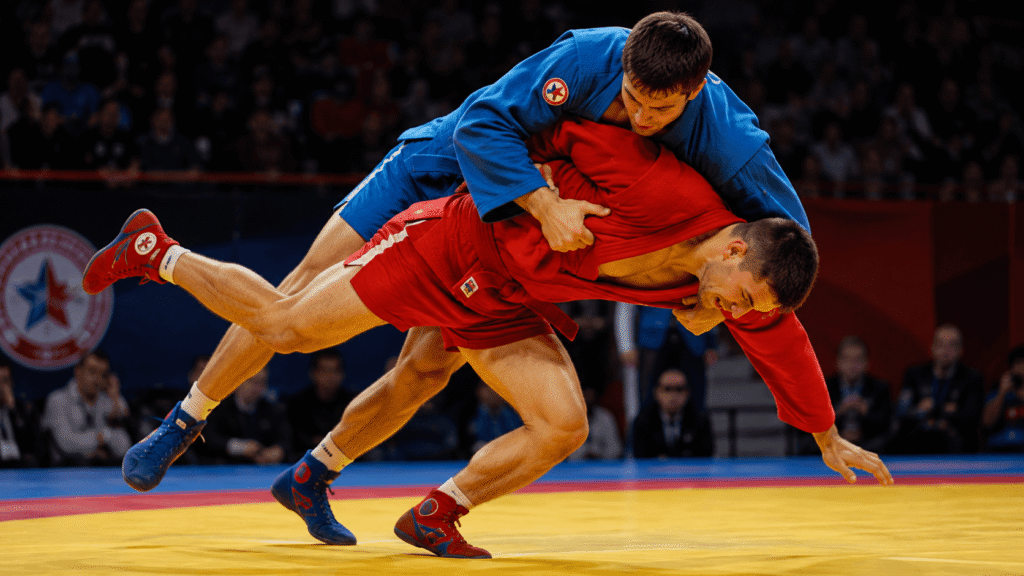
Sambo remains relatively unfamiliar to many Western sports fans despite being one of the most technically rich combat sports in the world, with a rich history rooted in the Soviet Union and continued strong participation across Russia and Eastern Europe today. Understanding its origins and unique rule set helps explain why the sport has produced such a strong pipeline of successful competitors in other combat disciplines over the years.
The Origins of Sambo
Sambo, an acronym derived from a Russian phrase roughly translating to self-defence without weapons, was developed in the early twentieth century in the Soviet Union, drawing on a combination of judo, traditional wrestling styles from across the Soviet republics, and other regional grappling traditions. It was originally developed partly for military and law enforcement training purposes before evolving into a structured competitive sport with its own distinct rules and techniques.
This diverse blend of influences gave sambo a broad technical base from the outset, combining judo-style throws, wrestling takedowns, and a wide range of submission techniques into a single, cohesive system that distinguishes it from martial arts developed with a narrower technical focus.
Sport Sambo Versus Combat Sambo
Sambo is generally divided into two main competitive formats. Sport sambo focuses primarily on throws, takedowns, and submissions, with competitors wearing a specific jacket, similar in some respects to a judo gi but with distinct design features, that can be gripped during throws and grappling exchanges. Points are awarded for successful throws and controlling positions, with matches also endable via submission.
Combat sambo, by contrast, incorporates striking techniques including punches, kicks, and elbow strikes alongside the grappling elements found in sport sambo, creating a format that shares significant overlap with modern mixed martial arts competition. This combat variant has historically served as a foundational training discipline for many successful competitors who later transitioned into professional mixed martial arts careers.
Distinctive Techniques Within Sambo
While sambo shares clear technical overlap with judo and wrestling, it also features a range of leg lock submissions that are more restricted or entirely prohibited in many other grappling disciplines, giving sambo practitioners a genuinely distinctive skill set within the broader grappling world. This emphasis on leg attacks has become increasingly influential in other grappling communities in recent years, as practitioners from other disciplines have studied sambo-influenced leg lock systems to expand their own technical repertoire.
The throwing techniques within sambo also carry a distinctive style, influenced by the specific jacket and grip conventions used in the sport, which differ somewhat from the equivalent grips and throws found in judo despite the clear shared ancestry between the two disciplines.
Sambo’s International Growth
While long dominant in Russia and neighbouring countries, sambo has expanded its international footprint considerably in recent decades, with national federations now established across dozens of countries worldwide. International competitions now regularly draw competitors from a genuinely global field, reflecting the sport’s gradual expansion beyond its traditional Eastern European heartland.
This growing international profile has also brought increased visibility to sambo’s technical contributions to the broader grappling and mixed martial arts world, with many coaches in other disciplines now actively incorporating sambo-derived techniques and training methods into their own programmes.
What a Beginner Class Looks Like
New sambo students typically begin with fundamental movement and falling techniques, similar in principle to the ukemi taught in judo, before progressing to basic grips, takedowns, and eventually groundwork and submissions. Given the sport’s combination of standing and ground techniques, beginner curricula often cover a broader initial range of skills compared to disciplines with a narrower technical focus, which some newcomers find exciting while others may initially find slightly overwhelming compared to more specialised martial arts.
Why Sambo Deserves Wider Recognition
Given its rich technical history and the significant influence it has had on modern grappling and mixed martial arts, many combat sports enthusiasts argue that sambo deserves considerably more recognition outside its traditional strongholds than it currently receives. For anyone with an interest in grappling arts already, exploring sambo offers a genuinely distinctive perspective, blending familiar elements from judo and wrestling with unique techniques and strategic approaches found nowhere else in quite the same combination.
Latest Sports News