

Padel has quietly become one of the fastest-growing racket sports on the planet, transforming from a relatively obscure activity found mainly in Spain and Latin America into a rapidly expanding phenomenon across Europe and increasingly beyond. Its blend of accessibility, social atmosphere, and genuine strategic depth explains why so many newcomers become hooked after just a single session.
What Exactly Is Padel
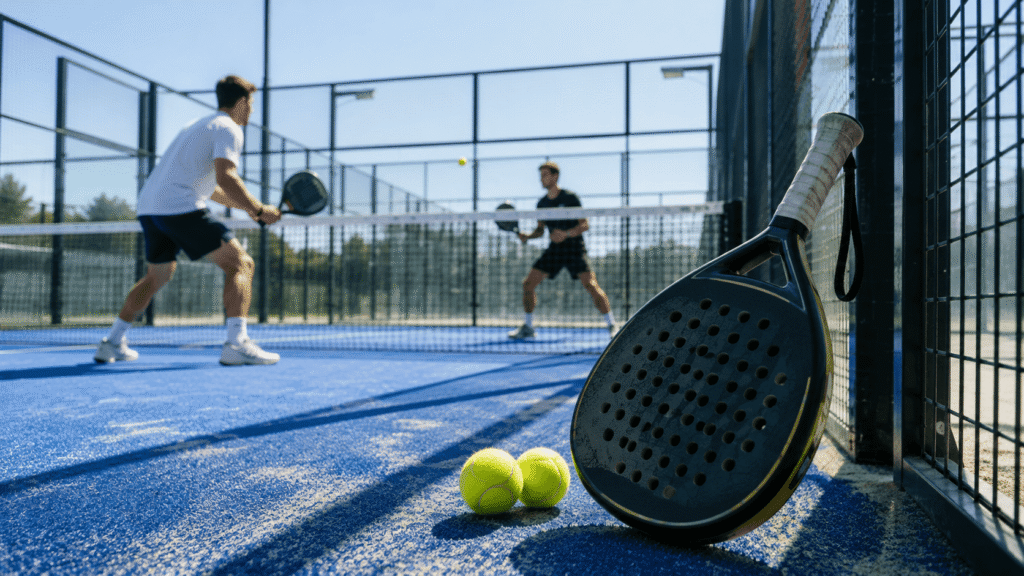
Padel is played on an enclosed court roughly a third the size of a tennis court, surrounded by glass and mesh walls that remain in play, allowing the ball to be returned even after bouncing off the enclosure. Matches are almost always played in doubles, with two players per side using solid, stringless paddles rather than traditional strung rackets.
Scoring follows the same basic structure as tennis, with games, sets, and matches, which makes the sport immediately familiar to anyone with a tennis background, even though the smaller court and enclosed walls create a dramatically different style of play in practice.
Why the Walls Change Everything
The enclosed walls are what truly separate padel from other racket sports. Rather than ending a point the moment the ball leaves the court boundary, players can use the walls strategically, either defensively to retrieve a ball that would otherwise be a clean winner in tennis, or offensively to create difficult, awkward angles for opponents.
This wall-based dimension rewards patience and positioning as much as raw power. Points frequently extend into long, tactical rallies where players work to manoeuvre opponents out of position rather than simply overpowering them with pace, which is part of why padel often feels more accessible to newcomers than tennis, where raw serve power and groundstroke pace can dominate matches at a competitive level.
Why It Is So Beginner-Friendly
Several factors make padel unusually approachable for complete newcomers. The smaller court reduces the distance players need to cover, lowering the physical fitness barrier compared to tennis. The solid paddle, without strings, also tends to be more forgiving for mishit shots, and the underarm serve, rather than tennis’s more technically demanding overhead serve, removes one of the most difficult skills for beginners to master in comparable racket sports.
Because padel is almost always played in doubles, newcomers also benefit from having a partner to share the court with, reducing the pressure of needing to cover the entire playing area alone while still learning the sport’s fundamentals.
Latest Sports News
The Social Dimension
Padel’s rapid growth owes a great deal to its inherently social nature. Because doubles is the standard format, a padel session almost always involves at least three other people, and many clubs actively cultivate a social, club-house atmosphere around their courts, with post-match drinks or food a common part of the culture in many regions where the sport has taken hold.
This social dimension has helped padel spread rapidly through word of mouth, with friend groups and workplace social circles frequently adopting the sport together, rather than relying purely on individual players discovering it independently, which has been a significant factor behind the sport’s rapid club membership growth in several European countries in recent years.
Basic Strategy for New Players
New players typically start by learning to control the ball off the walls rather than trying to hit powerful winners immediately. Understanding how the ball behaves after bouncing off the back or side glass, and learning to anticipate where a defensive shot off the wall is likely to land, forms the foundation of competent padel play far more than raw hitting power.
At the net, padel rewards good positioning and reflexes over power, since points are frequently decided by well-placed volleys rather than aggressive groundstrokes from the back of the court. Communication with your doubles partner about court coverage and shot selection also becomes increasingly important as players progress beyond the beginner stage.
Equipment Needed to Get Started
Getting started in padel requires relatively modest equipment: a padel paddle, suitable footwear with good lateral grip for the quick side-to-side movement the sport demands, and padel-specific balls, which are similar to tennis balls but with slightly reduced pressure. Many clubs offer equipment rental for beginners, making it easy to try the sport before committing to purchasing your own gear.
Where the Sport Is Headed
Padel’s growth shows little sign of slowing, with new courts opening rapidly across Europe and growing interest in markets that had little previous exposure to the sport. Increased television and streaming coverage of professional padel tour events has also helped raise the sport’s profile, introducing new audiences to the elite level of the game and, in turn, driving further grassroots participation.
For anyone curious about trying a new racket sport, padel offers a rare combination of low barriers to entry, genuine strategic depth for those who stick with it, and an inherently social format that makes it easy to build a regular playing group, all of which help explain why so many newcomers end up becoming lifelong enthusiasts after just a handful of sessions.