
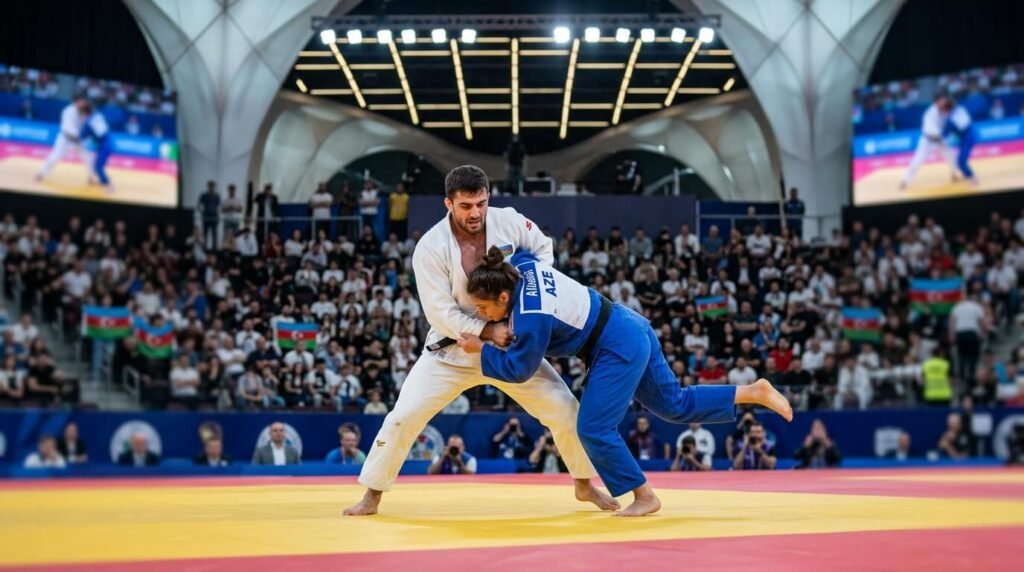


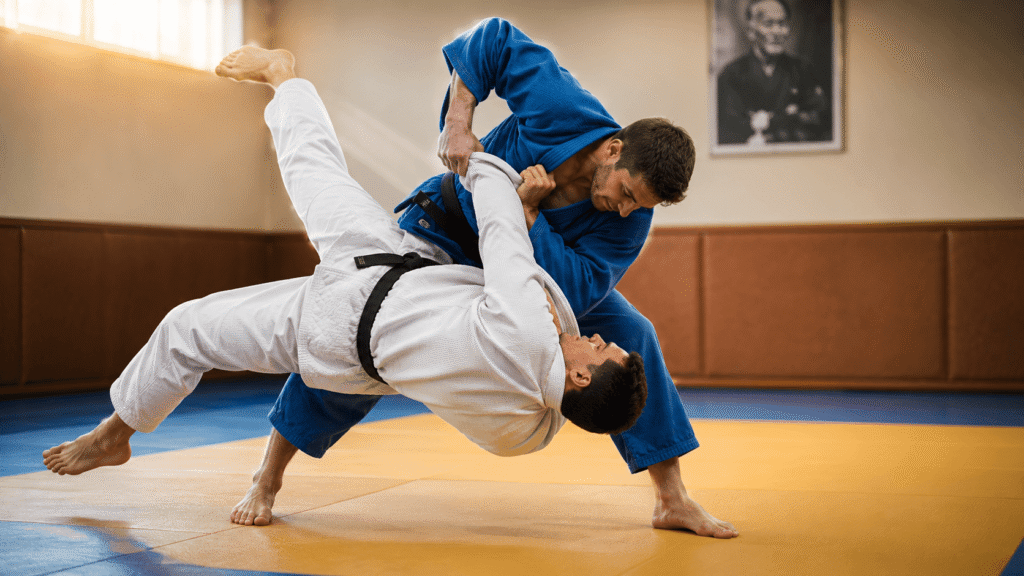
Judo, whose name translates roughly to the gentle way, might seem like a curious label for a sport built around powerful throws and forceful takedowns. Yet the philosophy behind the name reflects judo’s founding principle: using an opponent’s force and balance against them through technique and timing, rather than relying on brute strength alone. For newcomers, understanding this underlying philosophy makes the sport’s techniques and scoring system far easier to appreciate.
The Origins and Philosophy of Judo
Judo was developed in Japan in the late nineteenth century, drawing on older jujutsu traditions but reshaping them into a structured system emphasising mutual benefit and maximum efficiency of effort. This philosophy extends beyond the throws and techniques themselves into the broader culture of the sport, where respect for training partners and opponents is considered every bit as important as technical proficiency.
This foundational emphasis on efficiency, using minimal effort to achieve maximum effect by exploiting an opponent’s own momentum and balance, remains central to how judo is taught today, distinguishing it from martial arts that place greater emphasis on raw physical power.
Latest Sports News
Understanding Judo Scoring
Competitive judo matches are scored based on the quality and effect of throws, with the highest score, called ippon, awarded for a technique that lands an opponent largely on their back with significant force, speed, and control, immediately ending the contest. Lesser scores, historically including waza-ari, reflect throws that come close to this standard but fall slightly short in one of the required criteria.
Matches can also be won through pins, where a competitor holds their opponent on their back for a specified duration, or through submissions using joint locks or chokes, though these ground techniques are generally more restricted in judo compared to grappling arts like Brazilian jiu-jitsu, reflecting judo’s traditional emphasis on standing throws as the sport’s signature technique.
Core Techniques Every Beginner Learns
New judo students typically begin by learning ukemi, the art of falling safely, before progressing to actual throwing techniques. This emphasis on safe falling is not incidental; it allows students to practise throws with genuine resistance far sooner than would otherwise be safe, since a practitioner who can fall correctly is far less likely to be injured during the inevitable throws that occur throughout regular training.
From there, students progress through foundational throws such as hip throws, shoulder throws, and various sweeping and sacrifice techniques, each requiring careful attention to grip, footwork, and timing rather than simply forcing an opponent to the ground through strength alone. Groundwork, including basic pins and escapes, is typically introduced alongside standing techniques, giving students a well-rounded foundation across both phases of a judo match.
Latest Sports News
The Belt Ranking System
Similar to many martial arts, judo uses a belt ranking system to mark progress, typically beginning with white belt and advancing through a series of colours before reaching black belt and beyond. Grading requirements generally combine technical demonstration with competitive experience, ensuring that rank reflects genuine, tested ability rather than technique performed only in a controlled, cooperative setting.
The specific belt progression and grading requirements can vary somewhat between national federations, but the underlying principle remains consistent: judo rank is meant to represent both technical knowledge and the practical ability to apply that knowledge under genuine resistance.
Judo as an Olympic Sport
Judo has been part of the Olympic programme since the 1964 Tokyo Games, and Olympic success remains the pinnacle achievement for competitive judoka worldwide. The sport’s Olympic status has helped drive significant global development, with national federations across dozens of countries now producing competitors capable of challenging for medals at the highest level, a marked change from the sport’s early Olympic decades when a smaller number of nations dominated the podium.
What to Expect From Your First Class
A typical beginner judo class starts with a bow to show respect for the training space, followed by a structured warm-up incorporating judo-specific movement patterns. Instructors then usually introduce falling techniques before demonstrating a specific throw or grip, which students practise repeatedly with a partner at a controlled pace before any live sparring, known as randori, is introduced.
New students should expect to fall down, often repeatedly, during their early sessions. This is completely normal and, thanks to the strong emphasis on safe falling technique from day one, is far less intimidating in practice than it might sound to someone who has never trained before.
Why Judo Continues to Attract New Practitioners
Beyond its competitive and self-defence applications, judo offers a genuinely effective full-body workout combined with the mental engagement of learning technically demanding throws and grip fighting. The strong emphasis on discipline, respect, and structured progression also appeals to parents looking for a martial art with clear values for younger practitioners, while the sport’s Olympic pedigree continues to attract ambitious competitive athletes at every level.