


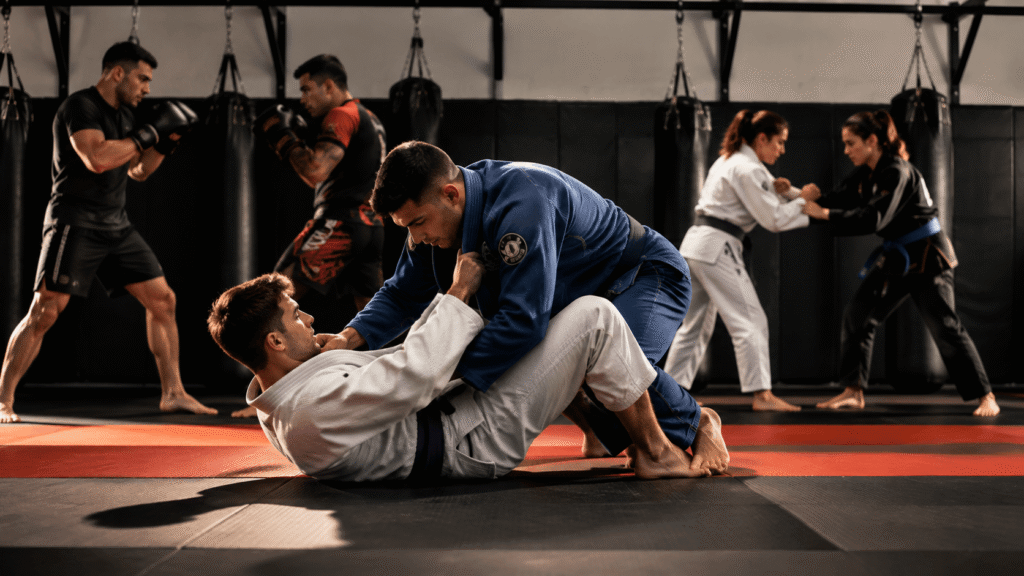
Walking into a martial arts gym for the first time can feel intimidating, especially with so many disciplines to choose from, each promising different benefits and philosophies. Whether your goal is fitness, self-defence, competition, or simply a new challenge, understanding the broad categories of martial arts available can help you find a discipline that genuinely suits your goals and personality.
Striking Arts
Striking-based martial arts focus on punches, kicks, elbows, and knees rather than grappling or ground fighting. Boxing, one of the oldest combat sports, develops hand speed, footwork, and head movement through a relatively narrow but deeply technical skill set focused entirely on punches. Muay Thai, often called the art of eight limbs, expands the toolkit to include kicks, knees, and elbows, and is known for its emphasis on clinch work and devastating leg kicks.
Karate and taekwondo, both rooted in traditional martial arts culture, emphasise structured forms alongside sparring, and often appeal to those interested in the philosophical and disciplinary aspects of training as much as the physical combat skills. Kickboxing sits somewhere between boxing and the kicking arts, offering a full-body striking workout without some of the more specialised clinch techniques found in Muay Thai.
Grappling Arts
Grappling-based disciplines focus on takedowns, control, and submissions rather than striking. Brazilian jiu-jitsu has become enormously popular worldwide, teaching practitioners how to use leverage and technique to control and submit opponents on the ground, making it particularly effective for smaller or lighter individuals against larger opponents. Judo shares some historical roots with jiu-jitsu but places greater emphasis on throws and takedowns from a standing position, with a distinctive competitive format built around explosive, technical throws.
Wrestling, one of the oldest organised sports in human history, develops exceptional takedown ability, positional control, and physical conditioning, and forms the foundation for many successful competitors in mixed disciplines. Sambo, originating in Russia, blends elements of judo and wrestling with its own distinctive submission and throwing techniques.
Latest Sports News
Mixed and Hybrid Approaches
Mixed martial arts training gyms typically blend striking and grappling disciplines together, reflecting the reality of modern combat sports competition where fighters need to be competent across multiple ranges. Beginners at these gyms often rotate through boxing, wrestling, and jiu-jitsu fundamentals before specialising further based on their individual strengths and interests.
Some traditional arts, such as certain styles of kung fu or krav maga, also blend striking and grappling concepts, often with a specific focus on practical self-defence scenarios rather than pure sport competition.
What to Consider When Choosing
Your goals should heavily influence which discipline you choose. If self-defence is the primary motivation, disciplines with a strong live sparring component, such as boxing, Muay Thai, wrestling, or jiu-jitsu, tend to translate more directly into practical skill than arts built primarily around choreographed forms, simply because regular sparring builds genuine reaction speed and pressure tolerance.
If fitness and stress relief are the main draw, almost any martial art delivers substantial cardiovascular and strength benefits, so personal enjoyment and the quality of instruction at your local gym often matter more than the specific discipline itself. Visiting a few different gyms, watching a class, and ideally trying an introductory session before committing to a long-term membership is one of the best ways to find the right fit.
What a Beginner Class Actually Looks Like
Most beginner martial arts classes start with a structured warm-up involving basic conditioning exercises, followed by technique drilling in pairs or small groups. Instructors typically break down movements step by step before allowing students to practise with a partner at a controlled pace. Sparring, when introduced, is usually heavily supervised and scaled to appropriate intensity for beginners, with an emphasis on control and safety rather than full-contact competition intensity.
New students should not expect to master techniques quickly. Martial arts reward patience and consistent practice over months and years, and even simple movements often take considerable repetition before they start to feel natural under any kind of pressure.
The Broader Benefits Beyond Combat Skill
Many long-term practitioners describe benefits that extend well beyond fighting ability. Improved discipline, body awareness, confidence, and stress management are commonly cited reasons people continue training for years or even decades after their initial reasons for starting have changed. The community aspect of training alongside others working toward similar goals also plays a significant role in why so many people stick with martial arts long after the initial novelty has worn off.
Ultimately, there is no single best martial art for everyone. The right choice depends on your goals, your body type, your schedule, and, perhaps most importantly, whether you genuinely enjoy the training itself, since consistency over time matters far more than which specific discipline you choose to begin with.