


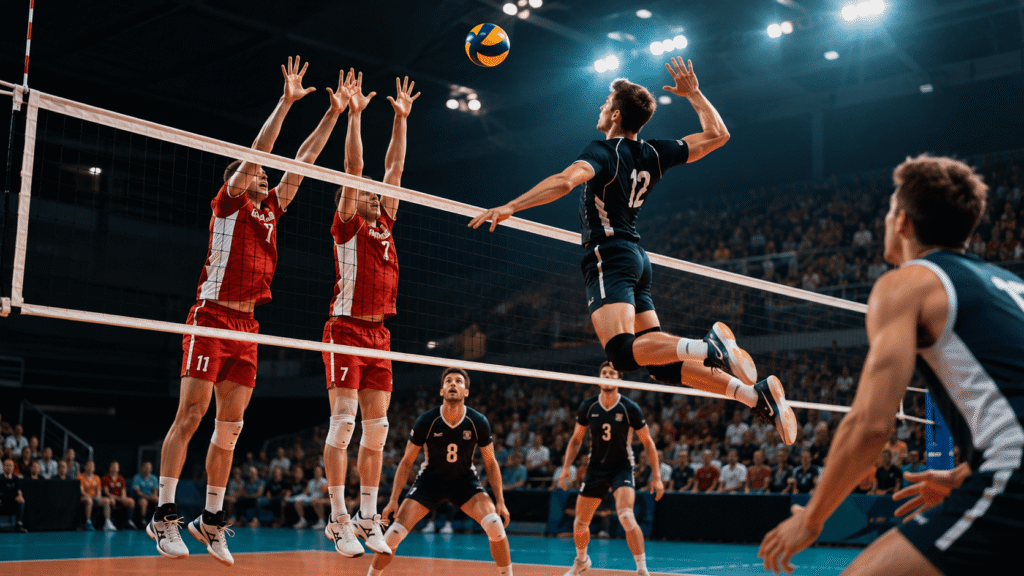
Volleyball combines explosive athleticism, split-second teamwork, and genuine strategic depth into a sport that remains hugely popular both as a competitive discipline and a casual recreational activity on beaches and in gyms around the world. For newcomers, understanding the basic rules and rotation system quickly transforms what might look like a simple game of hitting a ball over a net into a genuinely fascinating tactical contest.
Latest Sports News
The Basic Rules of Volleyball
Volleyball is played between two teams separated by a net, with each side allowed a maximum of three touches to return the ball over the net, though a single player cannot hit the ball twice in succession under standard rules. Matches are typically played to the best of five sets, with the first four sets played to twenty-five points and a final deciding set, if needed, played to fifteen points, with each set requiring a team to win by at least two clear points.
Rally scoring, where a point is awarded on every single rally regardless of which team served, has been standard in modern volleyball for some time, replacing an older system that only awarded points to the serving team, a change that significantly sped up match pacing and made scoring considerably easier for newcomers to follow.
Understanding the Rotation System
One of the more distinctive aspects of indoor volleyball is the rotation system, where players move clockwise around six court positions each time their team wins back the serve after losing a rally. This rotation ensures that every player takes a turn serving and playing in different areas of the court, though many modern teams use substitution rules to bring on specialist players suited to specific rotational positions once the ball is in play.
The libero position, a defensive specialist who wears a different coloured jersey and has specific substitution privileges allowing them to enter and exit the game without counting against normal substitution limits, adds an additional tactical layer, since teams can deploy a dedicated defensive specialist for back-row play without needing to substitute a stronger attacking player during their front-row rotations.
Key Positions and Their Roles
Setters typically act as the primary playmaker, using their second touch to set up attacking opportunities for their teammates, requiring exceptional ball control and split-second decision-making about which attacker to target based on the opposing block. Outside and opposite hitters serve as the primary attacking options, tasked with converting sets into powerful, well-placed attacks capable of beating the opposing block and defence.
Middle blockers focus heavily on defensive positioning at the net, reading the opposing setter’s intentions to time effective blocks against quick attacks through the middle of the court, while also contributing some attacking output of their own when opportunities arise. The libero, as mentioned, focuses purely on back-row defence and serve receive, often demonstrating some of the most spectacular defensive digs in the sport despite rarely, if ever, attacking the ball themselves.
Beach Volleyball Versus Indoor Volleyball
Beach volleyball, typically played in teams of two rather than six, demands considerably different skills compared to the indoor game, given the significantly larger relative area each player must cover and the additional physical challenge of playing on sand. This format places a premium on individual all-round ability, since with only two players per side, both athletes must be competent across serving, setting, attacking, and defending, unlike indoor volleyball where players often specialise heavily in a single role.
Environmental factors like wind and sun also add strategic considerations unique to beach volleyball, with players needing to factor conditions into serving and attacking decisions in ways that simply do not apply to the controlled indoor environment.
Getting Started as a Beginner
New players typically begin by developing fundamental ball control skills, including the forearm pass, commonly called bumping, and the overhead set, before progressing to serving and attacking technique. Many recreational leagues and community centres offer beginner-friendly sessions specifically designed to build these fundamentals in a lower-pressure environment before players progress to more competitive club or league play.
Why Volleyball Rewards Teamwork Above All
Perhaps more than most team sports, volleyball genuinely requires seamless cooperation between teammates, since the three-touch limit means no single player can carry an entire attacking sequence alone. This built-in structural emphasis on teamwork, combined with the sport’s fast pace and genuine athletic demands, is part of why volleyball continues to attract passionate participants at every level, from casual beach games to elite international competition.