

Swimming is often described as one of the most complete forms of exercise available, engaging nearly every major muscle group while placing minimal impact stress on joints. Yet for many adult beginners, the technical demands of proper stroke technique can feel far more challenging than expected, particularly since swimming relies heavily on efficient technique rather than raw effort alone. This guide breaks down the major strokes and offers practical advice for building confidence and competence in the water.
Freestyle: The Foundation Stroke
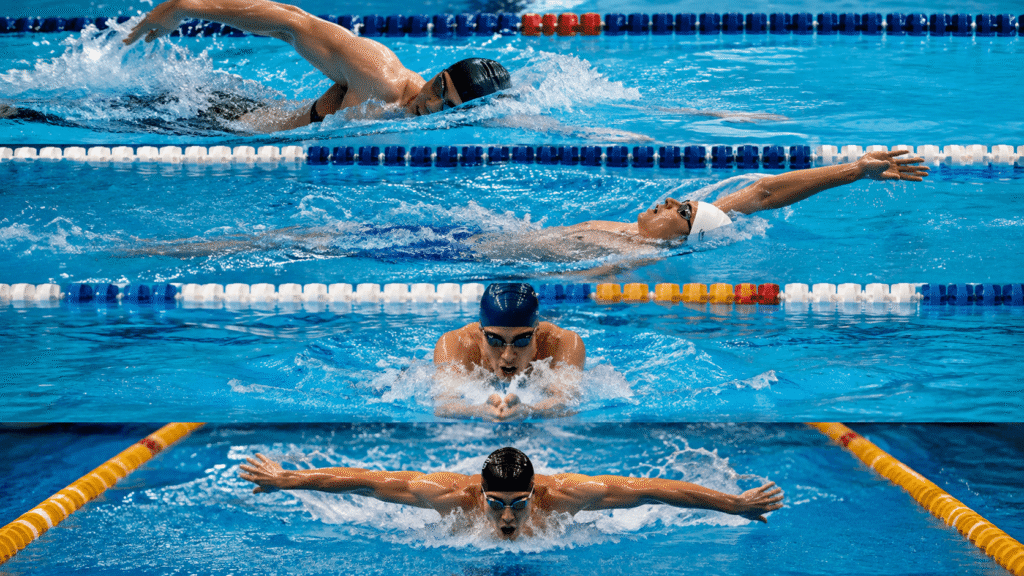
Freestyle, also known as front crawl, is generally the fastest and most commonly taught stroke, forming the foundation for most swimming instruction programmes. The stroke involves alternating overarm movements combined with a continuous flutter kick, with breathing typically coordinated by turning the head to the side during specific points in the arm cycle rather than lifting the head directly forward, which would disrupt the swimmer’s horizontal body position.
Body position is particularly crucial in freestyle, with efficient swimmers maintaining a long, streamlined position in the water rather than allowing their hips and legs to sink, which creates drag and significantly increases the effort required to maintain speed. Many beginners focus too heavily on arm strength alone, when in fact core engagement and body rotation play an equally important role in efficient freestyle technique.
Latest Sports News
Backstroke: Freestyle’s Mirror Image
Backstroke shares significant technical similarities with freestyle but is performed on the back, which removes the need for the timed breathing pattern that many beginners find challenging in freestyle, since the face remains above water throughout the stroke. This makes backstroke a genuinely useful stroke for beginners still building confidence with breathing coordination in the water.
The main technical challenge in backstroke tends to be spatial awareness, since swimmers cannot see where they are heading and must rely on peripheral vision, pool markings, and a consistent stroke count to maintain a straight line and avoid the pool wall, a skill that typically develops with practice rather than requiring any special technique beyond general body awareness.
Breaststroke: Technique Over Power
Breaststroke is often the first stroke many swimmers learn recreationally, given its relatively intuitive frog-like kick and simultaneous arm pull, though achieving genuine efficiency in competitive breaststroke actually requires considerable technical refinement. The timing between the arm pull, breath, kick, and glide phase, often summarised as pull, breathe, kick, glide, significantly affects overall efficiency, with many recreational swimmers rushing through the glide phase and losing much of the speed and efficiency the stroke can otherwise offer.
Because breaststroke allows for a natural breathing rhythm without needing to turn the head to the side, many beginners find it a comfortable, low-pressure stroke to build confidence with before tackling the more demanding coordination required in freestyle.
Butterfly: The Most Demanding Stroke
Butterfly is widely regarded as the most physically demanding of the four competitive strokes, requiring a powerful, simultaneous double-arm recovery combined with an undulating dolphin kick that engages the entire core and lower body. The rhythmic, wave-like body motion required for efficient butterfly technique typically takes considerably longer to develop than the other strokes, and most swimming instructors introduce it only once a swimmer has built solid foundational strength and technique in the other strokes.
Despite its difficulty, many swimmers find butterfly deeply satisfying once the timing clicks, since a well-executed stroke feels remarkably fluid despite its demanding physical requirements, a contrast many swimmers describe as one of the more rewarding technical breakthroughs in the sport.
Building Confidence as an Adult Beginner
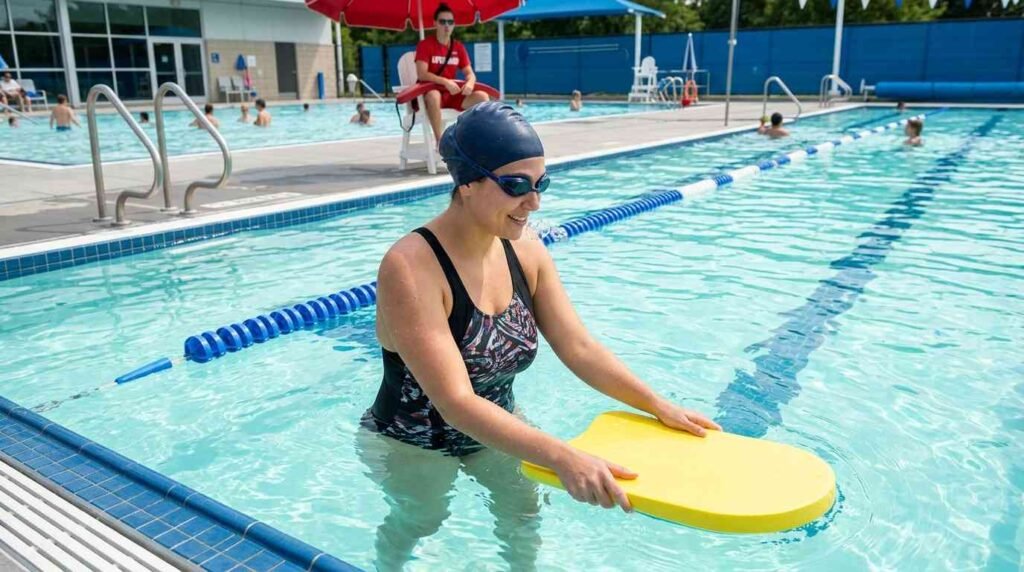
Adult beginners often carry more water anxiety than children learning to swim for the first time, which can make technique instruction considerably more challenging until basic comfort in the water is established. Many swim schools now offer dedicated adult beginner classes specifically designed to address this, focusing heavily on water confidence, floating, and breath control before introducing any formal stroke technique.
Progressing gradually, celebrating small technical improvements, and working with a qualified instructor who can identify and correct specific technique issues typically produces far better long-term results than attempting to self-teach purely from watching instructional videos, since subtle technique errors are often difficult to identify without external feedback.
Why Swimming Rewards Patience
Unlike many land-based sports where effort and fitness alone can produce reasonable results even with imperfect technique, swimming heavily rewards efficient technique over raw physical effort, since poor technique creates disproportionate drag in water compared to air. This means that adult beginners who feel frustrated by slow initial progress are often simply experiencing a normal part of the learning process, and consistent, technique-focused practice over time typically produces substantial improvement even for those who felt entirely uncomfortable in the water when they first began.