
American football can look overwhelming to newcomers, with its stop-start rhythm, complex playbooks, and specialised positions that rotate depending on whether a team is attacking or defending. Once the basic structure clicks, though, it reveals itself as one of the most tactically layered team sports in existence, closer in some ways to a strategy game played out by athletes than a simple contest of speed and strength.
The Basic Objective
The goal in American football is to advance the ball into the opposition’s end zone to score a touchdown, worth six points, typically followed by an extra point or two-point conversion attempt. Teams can also score field goals, worth three points, by kicking the ball through the goalposts, usually attempted when a touchdown drive stalls within reasonable kicking range.
Each team gets four attempts, called downs, to advance the ball ten yards. Successfully gaining ten yards resets the count to a new first down, while failing to do so within four attempts typically results in the team giving up possession, often by punting the ball away to flip field position in their favour.
Offensive Positions and Roles
The quarterback is usually the most prominent player on any American football roster, responsible for either handing the ball off to a running back, throwing to a receiver, or occasionally running the ball themselves. Behind the quarterback, running backs specialise in carrying the ball on the ground, while wide receivers and tight ends run pass routes designed to get open for a throw.
The offensive line, though rarely touching the ball itself, is arguably the most important unit on the field, tasked with blocking defenders to protect the quarterback and create running lanes. Elite offensive line play often goes unnoticed by casual viewers but is consistently cited by coaches and analysts as foundational to any successful offensive system.
Latest Sports News
Defensive Positions and Roles
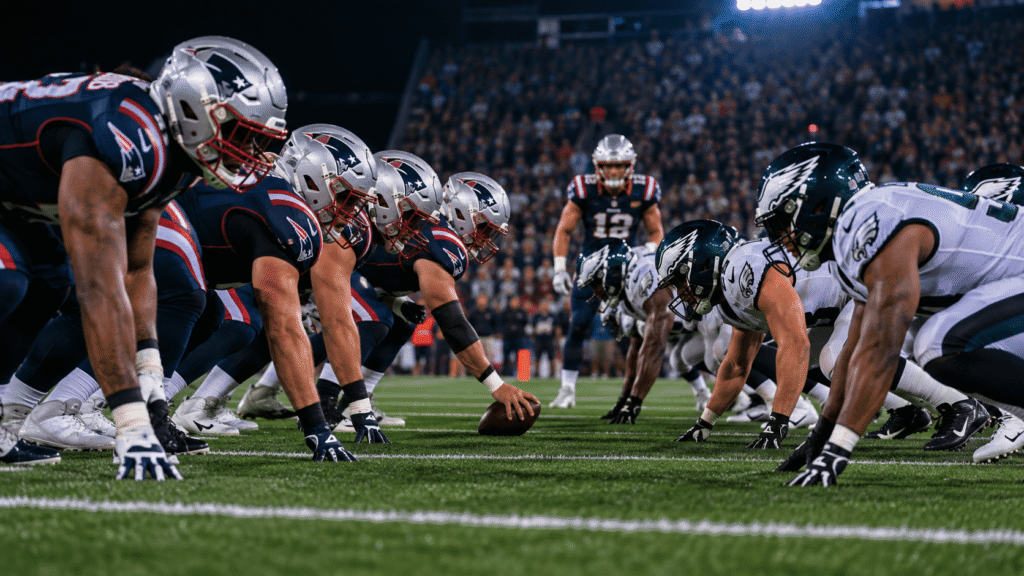
On defence, the defensive line aims to pressure the quarterback and stop running plays at the line of scrimmage. Linebackers sit behind the defensive line, reading the play as it develops and reacting to either stop the run or drop into pass coverage depending on the situation. Cornerbacks and safeties form the secondary, tasked with covering wide receivers and preventing big passing plays, while also providing run support when needed.
Defensive schemes vary enormously between teams, with some prioritising aggressive blitzing to pressure the quarterback and others favouring more conservative approaches designed to limit big plays and force opponents into lower-percentage decisions over a longer drive.
Understanding Play Calling and Strategy
American football is unique among major sports in how heavily it relies on pre-planned plays. Coaches design detailed playbooks covering countless offensive and defensive scenarios, and much of the strategic battle happens in the brief huddle between plays, where coaches and quarterbacks decide how to attack the specific defensive look they anticipate.
Down and distance, meaning how many yards remain for a first down and which attempt a team is on, heavily influences play calling. Third and short situations often favour running plays or short, high-percentage passes, while third and long situations typically require more ambitious passing plays to have any realistic chance of converting for a fresh set of downs.
Special Teams: The Overlooked Phase
Special teams units handle kicking plays, including kickoffs, punts, and field goal attempts, and often go underappreciated by casual fans despite frequently deciding close games. A blocked punt, a long kickoff return, or a missed field goal in the final seconds can single-handedly swing the outcome of a match, making special teams performance a genuinely important factor coaches spend considerable practice time refining.
Why the Sport Rewards Close Attention
Because so much of American football’s strategy happens before the ball is even snapped, casual viewers often miss the chess match unfolding between plays. Watching how an offence lines up its formation, or how a defence shifts its alignment in response, reveals layers of strategic anticipation that are simply invisible if you are only watching where the ball ends up after each play.
For newcomers, focusing on a single position group for a few games, whether that is watching how the offensive line handles pressure or how the secondary disguises its coverage, is one of the most effective ways to start appreciating the sport’s tactical depth beyond simply following the score.