
Learning how to breathe while swimming freestyle is the biggest step for most new swimmers. You swim a few strokes. Then you run out of air. Your head pops up. Your legs sink. You stop at the wall, breathless. This is very common, and it can be fixed.
This guide explains the technique in simple steps. You will learn the head position, the exhale, the body roll and the best breathing patterns. You will also find drills, a four-week plan and answers to common questions. Every tip is easy to follow, whether you swim in a pool or open water.
Key Takeaways: How to Breathe While Swimming Freestyle
- Keep your face down and your head in line with your body.
- Breathe out steadily under the water. Do not hold your breath.
- Turn your head to the side as your body rolls. Do not lift your head forward.
- Keep one goggle in the water and take a quick, small breath.
- Bilateral breathing means breathing to both sides. Every three strokes is a common pattern.
- Relax your neck, shoulders and jaw. Tension ruins your rhythm.
- Never do breath-hold drills alone. Ask a coach or lifeguard for safe training.
Why Breathing Matters in Freestyle
Freestyle is a continuous stroke. Your arms and legs keep moving. Yet you cannot breathe whenever you like. You must time each breath with your stroke. That makes breathing the hardest part for many swimmers.
Good breathing gives you three big benefits. First, it keeps you relaxed. Second, it keeps your body flat and balanced. Third, it lets you swim farther with less effort. Poor breathing does the opposite. It adds drag, tension and fatigue.
You can learn more about the stroke itself on the Wikipedia front crawl page. Freestyle is the fastest of the four main competitive strokes. It is also the most common stroke in fitness swimming and triathlon.
The Foundation: Body and Head Position
How to breathe while swimming freestyle starts with body position. Breathing works best when your body position is right. Fix this first. Everything else becomes easier.
Keep Your Body Flat
Your body should lie close to horizontal. Think of a long, straight line from head to toes. Your hips should stay near the surface. Sinking hips create drag and make breathing harder.
Look Down, Not Forward
Face the bottom of the pool. Keep your neck long and relaxed. Your hairline should sit near the water surface. A coaching guide from Tri247 also stresses smooth, coordinated breathing for a relaxed stroke.
Do not tuck your chin hard into your chest. Do not lift your head to look ahead either. Both habits break your body line.
Why Lifting Your Head Fails
Lifting your head pushes your hips down. Your legs then drop. You swim uphill and burn energy. This is why many swimmers feel exhausted after one length.
A guide from MySwimPro makes the same point. You should not breathe by lifting your head and facing forward. Breathe to the side instead.
How to Breathe While Swimming Freestyle: Step-by-Step
Follow these steps in order to master how to breathe while swimming freestyle. Practise each one slowly before you combine them. Start in the shallow end where you can stand if needed.
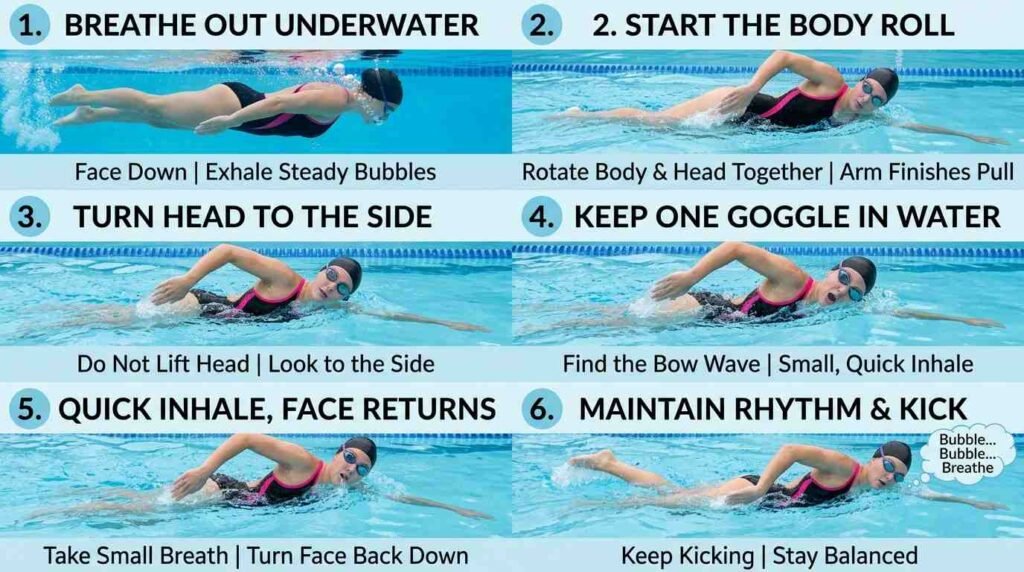
Step 1: Breathe Out Under the Water
This is the most important step. Breathe out through your nose and mouth while your face is in the water. Let the air flow out in a steady stream. Hum softly if it helps.
Many swimmers hold their breath. They then try to breathe out and in during one short moment. That feels rushed and panicky. A steady exhale solves the problem.
Step 2: Start the Roll With Your Body
Your body rotates along your spine as you swim. Your hips and shoulders turn together. This roll brings your mouth close to the surface. It also makes the stroke powerful.
Most of the turn comes from your body, not your neck. A swimmer on the Marathon Swimmers forum notes that you should not strain your neck for a breath. The body roll does most of the work.
Step 3: Turn Your Head to the Side
As your body rolls, turn your head with it. Keep your head in line with your spine. Turn just enough to clear your mouth. Do not lift.
Time the turn with your arm. Turn to the side of the arm that has just pulled through the water. For example, if your right arm pulls, you can breathe to the right.
Step 4: Keep One Goggle in the Water
Your head creates a small trough of water beside your face. This is called the bow wave. Your mouth can sit in that trough. Keep one goggle lens in the water. Your lower eye stays under the surface, and your mouth is out.
You do not need a big head turn. A small turn is enough. This keeps your neck relaxed and your body flat.
Step 5: Take a Quick, Small Breath
Breathe in through your mouth. Take a short, calm breath. Do not gulp. You have already breathed out, so your lungs are ready for fresh air.
Step 6: Return Your Face to the Water
Turn your face back down as your arm enters the water. Look at the bottom again. Start breathing out at once. This closes the loop and prepares the next breath.
Step 7: Keep Kicking and Stroking
Do not stop your legs or arms to breathe. A steady kick keeps your hips up. A smooth stroke keeps your speed. The breath should fit into the stroke, not interrupt it.
The Breathing Cycle: Bubble, Bubble, Breathe
Many coaches use a simple rhythm. You blow bubbles for two or three strokes. Then you turn and breathe. Then you repeat. The cycle keeps you calm and steady.
A common mental cue is “bubble, bubble, breathe.” You can also count strokes. Say “one, two, breathe” in your head. Pick a cue that works for you.
The Final Burst of Air
Just before you turn your head, give a small burst of air. This clears water from your nose and mouth. It also gives you a clean start to the inhale. The Houstonian Club guide notes that swimmers should exhale constantly under water, with a final burst before the breath.
Breathing Patterns in Freestyle
A breathing pattern is how often you breathe. It is a key part of how to breathe while swimming freestyle. It is counted in arm strokes. Each pull by one arm counts as one stroke.
| Pattern | Breathing Side | Best For |
|---|---|---|
| Every 2 strokes | Same side each time | Beginners, sprints needing air, warm-ups |
| Every 3 strokes | Alternating sides | Balanced technique and steady swimming |
| Every 4 strokes | Same side each time | Moderate breath control |
| Every 5 strokes | Alternating sides | Advanced breath-control training |
| Every 7 strokes | Alternating sides | Advanced breath-control training |
Odd numbers alternate sides. Even numbers keep you on the same side. This is why every 3, 5 or 7 strokes is called bilateral breathing.
Which Pattern Should You Choose?
Beginners can start with every two strokes. It gives frequent air. As you improve, try every three strokes. This gives balance and comfort on both sides. Do not force a pattern that leaves you gasping.
Your best pattern depends on your goal. A sprint, a long swim and an open water race need different rhythms.
What Is Bilateral Breathing?
Bilateral breathing means breathing to both sides. You breathe to the right, then the left, and so on. A guide from Kiefer explains that alternating breaths after every three strokes is the usual approach.
Benefits of Bilateral Breathing
- It balances your stroke and body roll.
- It helps you swim in a straighter line.
- It can reduce strain on one shoulder.
- It lets you breathe away from waves or sun in open water.
- It helps you spot other swimmers on both sides.
A SwimOutlet guide says bilateral breathing can smooth your stroke and help prevent shoulder problems. It also helps to even out muscle use on both sides.
Is Bilateral Breathing Always Best?
Not always. It is a great skill to learn. However, it may not suit every race. In a long endurance swim, you may want more air. Breathing every two strokes is not wrong then.
Some elite swimmers breathe every two strokes in races. The Your Swim Log article mentions this about Michael Phelps. A smart plan is to learn both sides. Then choose what works for each swim.
How to Learn to Breathe on Your Weak Side
Most people have a favourite breathing side when they learn how to breathe while swimming freestyle. The other side feels awkward. You may swallow water or lose balance. This is normal. It improves with practice.
Start With One-Arm Freestyle
Swim with one arm only. Keep the other arm at your side or hold a kickboard. Breathe to the side of the resting arm. This gives you time to focus on the turn and the breath.
Exaggerate Your Body Roll
Poor roll to the weak side is a common cause of trouble. Turn your hips and shoulders a little more to that side. Let your head follow. The breath then feels easier.
Kick on Your Side
Kick with your body tilted to one side. One arm stays stretched forward. Your face rests on the water near your shoulder. Breathe calmly. Switch sides after a few kicks.
Build Up Slowly
Practise three strokes on the weak side, then a rest. Later, alternate sides every few strokes. Finally, swim full lengths with a 3-stroke pattern. Do not rush the process.
Common Mistakes When Breathing in Freestyle
Almost every swimmer makes these mistakes when learning how to breathe while swimming freestyle. Fix them one at a time.
Holding Your Breath
This is the number one mistake. Holding air builds pressure. You then have too little time to breathe out and in. Blow bubbles continuously.
Lifting the Head
Lifting your head pulls your hips down. Turn your head with your body instead.
Turning the Head Too Far
Looking behind you twists your neck. It also breaks your body line. A small turn is enough.
Breathing Too Late
If you wait too long, your arm is already entering the water. You then rush the breath. Start the turn as your pulling arm finishes.
Crossing Over
Some swimmers cross their hand over the body line when they breathe. This causes wobble. Keep your hands entering in front of your shoulders.
Scissor Kick During Breaths
Some swimmers spread their legs wide when they breathe. This adds drag. Keep a narrow, steady kick.
Tension in the Neck and Jaw
A stiff neck makes turning hard. Relax your face and shoulders. Loose muscles help you breathe easily.
Panic Breathing
Quick, shallow gasps make you more tired. Slow down. Breathe out fully. Then take a calm breath.
Drills to Improve Breathing in Freestyle
Drills help you practise how to breathe while swimming freestyle one skill at a time. Use them in the pool. Repeat each one for a few lengths. Keep the effort low.
Drill 1: Bubble Blowing
Hold the pool wall. Put your face in the water. Blow bubbles for five seconds. Turn your head, breathe in, and repeat. This builds comfort with exhaling.
Drill 2: Kickboard Side Breathing
Hold a kickboard with both hands. Kick with your face in the water. Turn your head to the side for a breath. Then return to the water. Keep your kick steady.
Drill 3: Side Kick Drill
Kick on your side with one arm extended. Rest your head on the outstretched arm. Breathe normally. Swap sides after ten kicks.
Drill 4: Six-Kick Switch
Kick on one side for six kicks. Then take one stroke to roll to the other side. Kick six times again. This drill trains your body roll and your breathing position.
Drill 5: One-Arm Freestyle
Swim with one arm while the other stays at your side. Breathe to the resting arm side. Do two lengths on each side.
Drill 6: Catch-Up With Breath
Swim freestyle but keep one hand forward until the other hand touches it. Breathe on each stroke. This slows the stroke and helps timing.
Drill 7: Snorkel Swimming
A front-mounted snorkel lets you focus on body position. You can breathe without turning your head. Once your position is good, remove the snorkel and add side breathing.
Drill 8: Breathing Pattern Sets
Swim 4 by 50 metres. Breathe every 2, 3, 4 and 3 strokes. Rest 20 seconds between sets. Keep a relaxed pace.
A Sample Workout
Coaches share many practice sets. The MySwimPro guide includes a free drill workout for breathing on your side. It uses kick, drill and bilateral breathing sets. You can adapt it to your level.
A Four-Week Plan to Learn How to Breathe While Swimming Freestyle
Use this plan to build skill step by step. Swim two or three times per week. Keep every session relaxed. Stop and rest whenever you feel out of breath.
| Week | Focus | Main Drills |
|---|---|---|
| Week 1 | Exhaling and comfort | Bubble blowing, kickboard breathing, side kick |
| Week 2 | Timing the breath | One-arm freestyle, six-kick switch, breathe every 2 |
| Week 3 | Weak-side skill | One-arm drills on weak side, breathe every 3 |
| Week 4 | Rhythm and endurance | Mix patterns, longer relaxed swims |
Track your progress. Note how many lengths you can swim without stopping. Celebrate small gains.
How to Breathe While Swimming Freestyle in Open Water
Open water adds waves, sun and other swimmers, so how to breathe while swimming freestyle needs small changes. Your breathing plan may need a small change.
Breathe Away From the Waves
If waves hit one side, breathe to the other side. The Houstonian guide notes that bilateral breathing lets swimmers breathe away from chop. This keeps water out of your mouth.
Sight Forward
Open water has no black line to follow. You must look up to find landmarks. Lift your eyes briefly and return your face to the water. Combine a sighting move with a breath if you can.
Use Bilateral Breathing for Awareness
Breathing to both sides helps you see other swimmers and kayaks. You can also see the shore or buoys on both sides. This adds safety and control.
Stay Calm at the Start
Crowded starts make people gasp. Begin at a steady pace. Breathe out fully. Find your rhythm before you speed up. The Active.com breathing guide covers pacing through a stressful triathlon swim start.
Safety First
Never swim alone in open water. Use a bright cap and a tow float. Check weather and water conditions. Follow local rules and lifeguard advice. Read basic safety advice from the American Red Cross if you are new.
How to Breathe When You Feel Out of Breath
Feeling breathless is normal when you start to learn how to breathe while swimming freestyle. Your fitness will improve over weeks. Meanwhile, use these tips.
- Slow down your stroke and kick.
- Breathe out fully under the water.
- Rest at the wall for 15 to 30 seconds.
- Breathe every two strokes for a while.
- Relax your face, neck and hands.
- Swim shorter distances with more rest.
If you feel dizzy, chest pain or unusual shortness of breath, stop swimming. Get out of the water and seek medical advice. Talk to a doctor if you have a heart or lung condition.
Breath-Hold and Hypoxic Training: A Safety Warning
Some swim sets ask you to breathe less often. Examples include breathing every 5 or 7 strokes. These can build breath control. However, they are advanced. Use them with care.
Never try extreme breath-holding alone. Do not hyperventilate before swimming underwater. This can cause a sudden blackout without warning. It can be deadly. Train with a qualified coach and a lifeguard.
Equipment That Can Help You Breathe Better
Goggles
Well-fitting goggles keep water out of your eyes. They also help you feel calm. Choose a pair that seals comfortably.
Front Snorkel
A front snorkel supports good head and body position. It lets you practise arm strokes without turning to breathe. It is a useful training tool.
Nose Clip
Some swimmers dislike water in the nose. A nose clip can help. Learning to breathe out through the nose also works well.
Fins
Short fins help you keep your hips up. They also add speed. This gives you more time to breathe. Use them as a training aid.
Kickboard and Pull Buoy
A kickboard helps kick drills. A pull buoy lifts your legs and isolates your arms. Both help you focus on breathing.
Freestyle Breathing for Triathletes
Triathletes often swim in open water with crowds, so how to breathe while swimming freestyle matters even more. Efficient breathing matters even more. It keeps your heart rate down. It also saves energy for the bike and run.
Practise bilateral breathing in training. Use every-two and every-three patterns at different times. Learn to sight while breathing. Rehearse race starts with friends. You can learn about the sport itself on the Wikipedia triathlon page and the open water swimming page.
Freestyle Breathing for Children and Young Swimmers
Children learn best through play. Keep sessions short and fun. Use games with bubbles and floating toys. Praise effort, not speed.
Start with face-in-water comfort. Move to kicking with a board. Then add arm strokes. Use a qualified instructor for group lessons. Swimming organisations such as Swim England and USA Swimming offer learn-to-swim resources.
Freestyle Breathing for Competitive Swimmers
Competitive swimmers care about speed, and how to breathe while swimming freestyle affects it. Every breath costs a little time. Elite swimmers keep the head low and the turn small. They breathe efficiently. Some race with fewer breaths in short events.
Sprinters may breathe less often. Distance swimmers breathe more regularly. Many use a mixed approach. They learn to breathe on both sides and choose the best plan for each race. You can follow major events through World Aquatics. Read more about the sport on the Wikipedia swimming page.
Quick Reference: How to Breathe While Swimming Freestyle
| Skill | What to Do |
|---|---|
| Head position | Face down, neck relaxed, hairline near the surface |
| Exhale | Blow steady bubbles under the water |
| Turn | Roll body and head together to the side |
| Goggle | Keep one goggle in the water |
| Inhale | Quick, small breath through the mouth |
| Return | Face down again as your arm enters |
| Pattern | Start every 2, then move to every 3 |
Your Pool Checklist
- Warm up with easy laps and bubble blowing.
- Check your head position before each set.
- Exhale fully before every turn of the head.
- Practise both sides during drills.
- Stay relaxed in the neck and shoulders.
- Rest when you feel tired or dizzy.
- Finish with easy swimming and a stretch.
How to Breathe While Swimming Freestyle: Timing With Your Arms
Timing is the secret of how to breathe while swimming freestyle smoothly. Your breath must match your arm cycle. This section shows the timing in simple parts.
The Pull and the Turn
Your arm pulls back under the water. As it finishes the pull, your body rolls toward that side. Your head turns with the roll. Your mouth reaches the air just as the arm exits.
The Recovery Arm
Your other arm swings forward above the water. It stays relaxed. Your head returns to the water as this arm enters in front of you. The two moves link together.
Common Timing Errors
- Turning too early, before the arm has finished its pull.
- Turning too late, after the arm has entered the water.
- Lifting the head instead of rolling the body.
- Pausing the arms while you breathe.
Film yourself from the side. Watch your head as your arm moves. This simple check often shows what to fix.
How to Breathe While Swimming Freestyle: Kick and Body Balance
Your legs do more than move you forward. They also keep your body balanced during each breath. A steady kick helps you turn without sinking.
Keep a Small, Steady Kick
Kick from your hips, not your knees. Keep your feet close together. Make small, fast kicks. Big kicks waste energy and cause drag.
Do Not Stop Kicking to Breathe
Some swimmers freeze their legs during the breath. Their hips then drop. Keep the same kick rhythm throughout the stroke.
Use Your Core
Your core links your upper and lower body. Gentle core strength helps you rotate smoothly. Simple exercises like planks and dead bugs can help off the pool deck.
Dry-Land Exercises to Help You Breathe Better in the Water
You can practise parts of the skill on land. These exercises build strength and body awareness. They also help calm nerves.
Breath Control Practice
Sit or stand comfortably. Breathe in through your nose for a few seconds. Breathe out slowly through your mouth. Keep the out-breath longer than the in-breath. This teaches steady exhaling.
Neck and Shoulder Mobility
Gently roll your shoulders. Turn your head slowly from side to side. Keep the movement small and comfortable. Loose muscles help your head turn.
Core Strength
Do planks and side planks for short sets. Add gentle rotation exercises. Stronger core muscles help you keep a long, straight body line.
Body Roll Practice
Lie on your back on a mat. Roll your hips and shoulders to one side, then the other. Keep your head in line with your spine. This mimics the swim roll.
Mental Tips for Calm Breathing in the Water
Breathing in water can feel scary at first. Your mind matters as much as your muscles. A calm mind makes the technique easier.
Start in the Shallow End
You can stand if you need to. This keeps anxiety low. Move to deeper water only when you feel ready.
Use Short Goals
Aim for one length at a time. Rest between lengths. Small wins build confidence.
Focus on Exhaling
Think about the bubbles, not the breath. A long, steady exhale brings calm. The inhale then feels natural.
Ask for Help
A coach can spot small errors you cannot see. A few lessons can save months of struggle. Group classes are also fun and social.
How to Breathe While Swimming Freestyle if You Wear Glasses or Have Long Hair
Small practical issues can distract you. Solve them early, and you can focus on technique.
Prescription Goggles
If you wear glasses, ask about prescription goggles. Clear vision helps you feel safe. It also helps you read the lane lines.
Long Hair
Tie your hair back or wear a swim cap. Loose hair can cover your face and cause panic. A cap also reduces drag.
Ears and Nose
Use earplugs or a nose clip if water bothers you. Test them in shallow water first. Pick what feels comfortable.
More Sports Coverage on Our Network
If you enjoyed this guide, explore more on our sister sites. Sports Tamasha covers cricket, football and daily sports stories. Sports News Era brings fast news and match reports. Sports Dastak adds analysis, trending stories and player profiles.
Together, these sites give you a full view of sport and fitness. Visit them often for training tips, guides and news.
How to Breathe While Swimming Freestyle: Frequently Asked Questions
How do you breathe while swimming freestyle?
Breathe out steadily under the water. Then turn your head to the side as your body rolls. Take a quick breath with one goggle in the water. Return your face and repeat.
How often should you breathe in freestyle?
Most people breathe every two or three strokes. Beginners may prefer every two. Every three gives balance on both sides. Choose a rhythm that feels calm.
What is bilateral breathing?
It means breathing to both sides. A pattern of every three, five or seven strokes alternates sides. It helps balance your stroke and body roll.
Why do I run out of breath when I swim?
Most people hold their breath under the water. They then rush the exhale and the inhale. Blow bubbles steadily. Slow your pace. Fitness also improves with practice.
Should I breathe out through my nose or mouth?
You can use both. Many swimmers breathe out through the nose and mouth together. Keep the flow steady and calm.
Why do I sink when I turn to breathe?
You may be lifting your head. That drops your hips and legs. Keep your head in line with your body and turn with your body roll.
How long does it take to learn freestyle breathing?
Many people improve in a few weeks with regular practice. Skill takes longer for some swimmers. Steady practice and good drills help most.
Is it safe to hold my breath while swimming?
Do not hold your breath as a technique. Extreme breath-hold training is risky. Never do it alone. Do not hyperventilate before going underwater.
Final Thoughts on How to Breathe While Swimming Freestyle
Good freestyle breathing is calm, small and steady. Keep your face down. Exhale under the water. Turn with your body and take a quick breath. Practise both sides. Be patient with yourself.
Bookmark this guide and share it with a swim buddy. Use the four-week plan in your next sessions. Soon you will swim lengths with ease.
Sources and Useful Links
- MySwimPro: How to breathe when swimming freestyle
- SwimOutlet: How and why to bilateral breathe
- Tri247: Coordinate breathing with your swim stroke
- Active.com: Breathing tips for swimmers
- Houstonian Club: Breathing in freestyle
- Your Swim Log: Bilateral breathing and faster freestyle
- Kiefer: Bilateral breathing for swimmers
- Marathon Swimmers Forum: Bilateral breathing drills
- Wikipedia: Front crawl
- Wikipedia: Swimming (sport)
- Wikipedia: Open water swimming
- Wikipedia: Triathlon
- World Aquatics
- Swim England
- USA Swimming
- American Red Cross